
I am not someone who eats the same thing every day. The idea used to bore me. Variety, I told myself, was the whole point of food.
Then I read something that lodged in my brain and would not leave: that the first thing you eat in the morning sets the metabolic tone for your entire day - your blood sugar, your hunger hormones, your energy, even your skin's inflammatory load. And that most women sabotage all of it in the first ten minutes after waking.
So I ran an experiment. One breakfast. Every single day. For thirty days. I wanted to know what would actually happen.
By the end, two separate people asked me what I had changed about my skin. I had changed nothing about my skin. I had only changed what I ate at 7am.
Here is the breakfast, why each part of it matters, and what thirty days actually did.
The Breakfast
It is not exciting. That is rather the point.
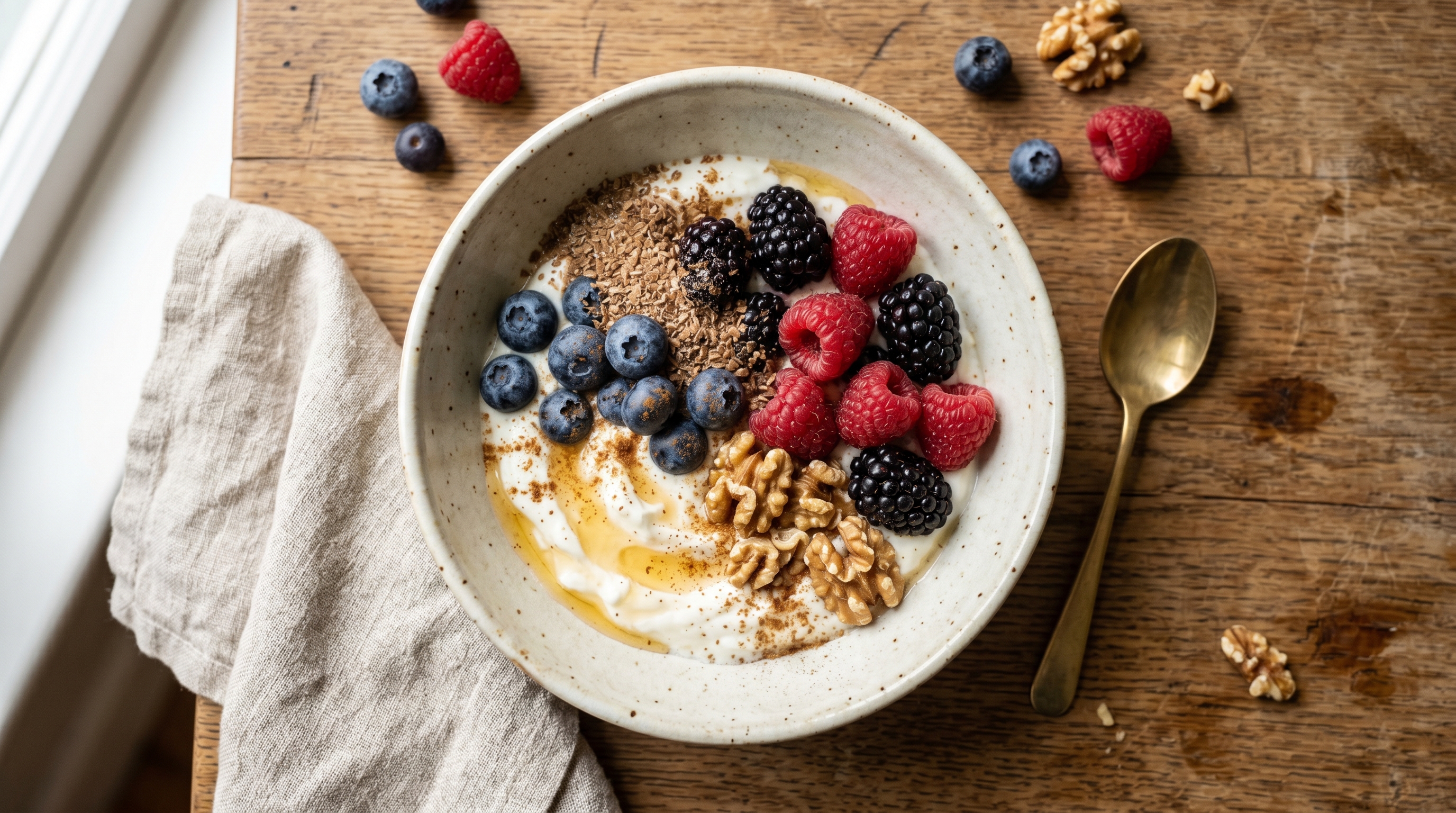
A bowl of full-fat Greek yogurt. A scattering of mixed berries - blueberries, raspberries, whatever was freshest. A tablespoon of ground flaxseed. A small handful of walnuts. A light drizzle of honey. And a sprinkle of cinnamon over the top.
That is it. Five minutes. No cooking. The same bowl, every morning, for a month.
Why Each Ingredient Is Doing Real Work
The magic is not in any single ingredient. It is in what they do together - stabilising blood sugar, lowering inflammation, and feeding the gut all at once.
Greek yogurt delivers around 17 grams of protein per serving, and this is the part most women get wrong about breakfast. Research published in the American Journal of Clinical Nutrition found that a high-protein breakfast significantly reduced cravings and late-day overeating compared to a high-carbohydrate breakfast. Protein in the morning blunts the blood sugar rollercoaster before it even starts. The yogurt also delivers live cultures that support the gut microbiome - and the gut, as it turns out, has everything to do with skin.
Berries are among the most antioxidant-dense foods available. Their deep colour comes from anthocyanins, compounds shown in research published in the Journal of Agricultural and Food Chemistry to reduce oxidative stress and inflammatory markers. For skin specifically, oxidative stress is one of the primary drivers of premature ageing and dullness. You are eating colour that your skin cashes in later.
Ground flaxseed is one of the richest plant sources of omega-3 fatty acids and lignans. A study in the Journal of Cosmetic Dermatology found that flaxseed supplementation measurably improved skin hydration and reduced sensitivity and roughness over twelve weeks. The grinding matters - whole flaxseed passes through undigested, so the ground form is what unlocks the benefit.
Walnuts add more omega-3s plus vitamin E, a fat-soluble antioxidant that the skin uses directly for barrier protection. The fat in the walnuts also slows the absorption of the honey's sugars, keeping the whole bowl blood-sugar-friendly.
Cinnamon is not just for flavour. Multiple studies, including research in the journal Diabetes Care, have found cinnamon improves insulin sensitivity and helps regulate blood glucose response to a meal - meaning the small amount of honey does not spike you the way it would on its own.
Honey, used lightly, satisfies the desire for sweetness without the crash, especially when buffered by all the protein and fat around it.
"Your skin is the receipt for what you have been eating. Not yesterday - the last several weeks. Most women treat the surface and ignore the kitchen."
What Thirty Days Actually Did
I tracked how I felt because I did not trust my own memory to be honest.
Week one was unremarkable except for one thing: the mid-morning hunger that used to send me looking for a second coffee and something sweet around 10:30 simply did not arrive. The protein and fat were doing exactly what the research promised.
Week two, my afternoon energy stabilised. The crash I used to treat as an unavoidable fact of being alive softened into something much gentler. I was not reaching for sugar at 3pm because my blood sugar had not been on a rollercoaster since 7am.
Week three is when the skin comments started. Not from me - from other people. A clarity, a slight evenness, that I had not engineered with any product. I had simply removed the daily inflammatory spike of my old breakfast and replaced it with thirty consecutive days of anti-inflammatory, antioxidant-dense, gut-supporting food.
Week four, the most interesting change was psychological. I no longer thought about breakfast. The decision was made. That single removed decision freed up a surprising amount of mental space, and the consistency itself became a quiet daily act of caring for myself.
The Real Lesson
The breakfast is almost beside the point. You could build a different one on the same principles - protein, healthy fat, antioxidants, fibre, blood-sugar stability - and get similar results.
The real lesson is that consistency at one meal, held for long enough, does what no single "superfood" or expensive serum can do. Your body responds to patterns, not to moments. Thirty days of the same intentional breakfast is a pattern your skin and your energy can actually read.
If you try one thing from everything I have written, let it be this: protect your first meal. Make it work for you. Then hold it long enough to see what your body does with the consistency.
Mine surprised me. I suspect yours will too.
- Seraphina
Join the Inner Circle
Seraphina's Weekly Letters
Weekly wellness notes for women who are quietly becoming.