I am going to be honest with you about something.
I did not set out to build an anti-inflammatory eating habit. I was not tracking my inflammation markers or reading nutrition labels. I was just tired. And my skin was showing it.
A functional medicine doctor I saw told me something that rearranged how I think about food. She said: "Every meal is either adding to the inflammation in your body or reducing it. There is no neutral."
I sat with that for a while. And then I started building one meal that was as close to purely reducing as I could make it. A bowl I could eat regularly without thinking. A bowl that did something real.
I have been making some version of this for eight months. Here is what it has and why.
The Bowl
This makes one serving. I make it four times a week.
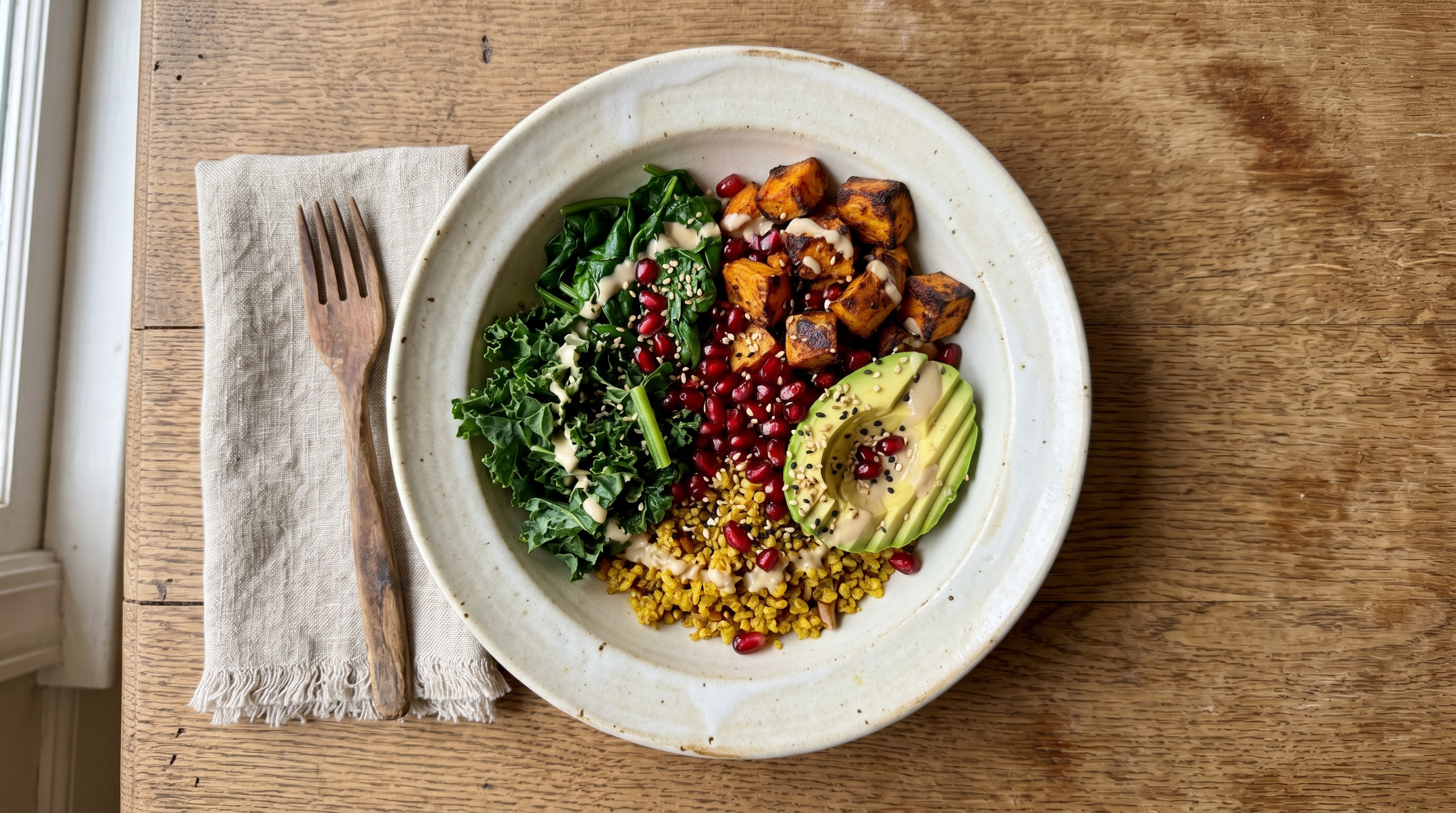
Base (choose one): - Cooked white rice with turmeric and black pepper (quarter teaspoon each, stirred in while warm) - OR quinoa prepared the same way - About 150g cooked
Greens (both): - Handful of raw kale, massaged with a small amount of olive oil and lemon until softened - Handful of spinach, wilted in a dry pan for 90 seconds
Roasted: - 150g sweet potato, cubed, roasted at 200°C for 25 minutes with olive oil, salt and cumin
Fresh: - Half an avocado, sliced - Two tablespoons of pomegranate seeds
Dressing: - One tablespoon of tahini - Juice of half a lemon - Teaspoon of water to loosen - Pinch of salt
Garnish: - Teaspoon of toasted sesame seeds - Optional: a soft-boiled egg for additional protein
Build it in the bowl. Dressing over everything at the end.
What Each Ingredient Is Actually Doing
This is the part that changed how I eat. Once I understood what the ingredients were for, I stopped treating the bowl like a recipe and started treating it like medicine.
Turmeric and black pepper work as a pair. Curcumin — the active compound in turmeric — has been extensively studied for its anti-inflammatory properties. Research published in Oncogene found curcumin inhibited the same inflammatory pathways targeted by pharmaceutical anti-inflammatory drugs. The critical detail: curcumin alone has very low bioavailability. Piperine in black pepper increases absorption by up to 2,000% according to research published in Planta Medica. They must be taken together.
Kale and spinach provide folate, vitamin K, and polyphenols. A meta-analysis in the British Journal of Nutrition found that dark leafy green consumption was inversely associated with systemic inflammatory markers. The mechanism is partly through the gut — leafy greens feed beneficial bacteria that produce short-chain fatty acids, which reduce intestinal inflammation that otherwise enters the bloodstream.
Sweet potato is one of the most reliable foods for sustained energy without blood sugar instability. Its high fibre content slows glucose absorption significantly. Additionally, beta-carotene — which gives sweet potato its colour — is converted to vitamin A in the body and plays a direct role in skin cell turnover and repair.
Avocado contributes oleic acid, the same monounsaturated fat in olive oil, which has been shown in multiple studies to reduce inflammatory biomarkers including C-reactive protein and interleukin-6. A study published in Nutrients found that eating one avocado daily for 12 weeks reduced LDL oxidation and inflammatory markers in overweight adults.
Pomegranate seeds contain punicalagins and punicic acid — compounds unique to pomegranate with some of the highest antioxidant activity of any fruit. Research published in the Journal of Nutritional Biochemistry found pomegranate reduced oxidative stress markers in subjects with metabolic syndrome. In skin-specific terms, punicalagins have shown measurable effects on collagen protection and UV-induced inflammation in peer-reviewed cosmetic dermatology research.
Tahini is ground sesame, and sesame contains sesamin and sesamolin — lignans with documented anti-inflammatory properties. A randomised clinical trial published in the International Journal of Preventive Medicine found sesame consumption significantly reduced inflammatory markers and oxidative stress in patients with knee osteoarthritis. Tahini also provides calcium, zinc, and B vitamins relevant to hormone regulation.
Lemon juice alkalises the meal in digestion, supports bile production for fat absorption (critical for absorbing the fat-soluble compounds in this bowl), and provides vitamin C which is necessary for collagen synthesis. Without vitamin C, the body cannot properly form collagen regardless of other inputs.
> "Your skin is the last organ to receive nutrients and the first to show their absence. What you eat consistently is more powerful than anything you apply topically."
What Changed For Me
I want to be specific because vague wellness claims help no one.
Within the first two weeks of eating this bowl four times a week, my afternoon energy stabilised noticeably. The specific crash I described to my doctor — the one between two and four that felt like my brain just switched off — softened.
By week six, a dermatologist I saw commented on my skin's texture unprompted. I had not told her I was doing anything different. She asked if I had changed my skincare. I had not.
By month two, blood work I did as part of a routine check showed C-reactive protein — one of the primary markers of systemic inflammation — had dropped from 4.2 to 1.8 mg/L. My doctor noted it. I told her about the bowl.
I am not making medical claims here. This is one woman's experience. But my experience is consistent with what the peer-reviewed literature says about the cumulative effect of consistent anti-inflammatory eating. The food is doing what food does when you choose it intentionally.
A Few Practical Notes
Make the sweet potato in batches. Roast enough for three or four days on Sunday. It keeps perfectly in the fridge and cuts your prep time to under five minutes.
The tahini dressing scales easily. Make two tablespoons of dressing at a time and store the extra in a small jar. It lasts four days refrigerated.
Swap the base freely. I have used millet, buckwheat, and brown rice with the same results. The turmeric and black pepper on whatever grain you use is the non-negotiable.
Add protein when hungry. A soft-boiled egg, a tin of sardines, or pan-cooked salmon work well. The bowl is designed to be building blocks, not a fixed recipe.
Start with one bowl a week. See what happens to your energy after lunch that day. That is the only data point you need to begin.
— Seraphina
Go Deeper on Gut Health
What you eat and how your gut processes it affects everything — energy, skin, hormones, mood. The InnerGlow Reset guide connects those dots clearly and without the noise.
Read the InnerGlow Reset GuideJoin the Inner Circle
Seraphina's Weekly Letters
Weekly wellness notes for women who are quietly becoming.